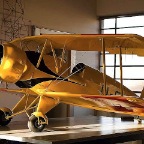
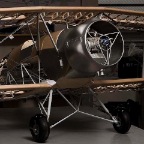
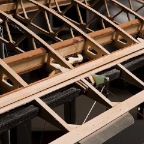
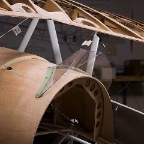
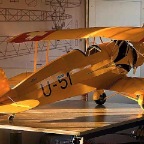
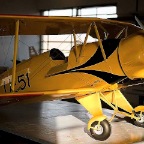
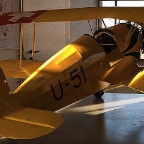
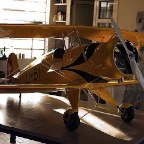
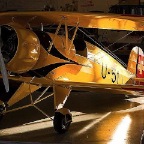
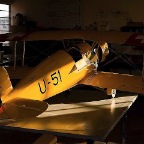
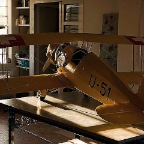
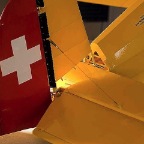
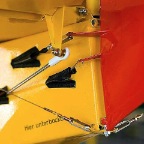
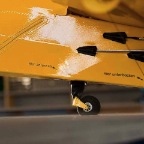
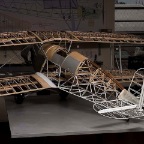
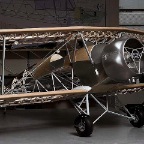
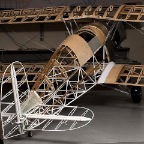
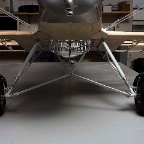
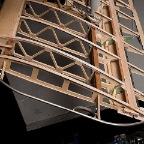
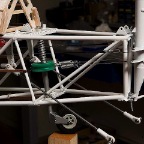
Wing span: 2.200 mm. (86,61”) Lenght 1.923 mm. (75,7”) without engine Wing area: 120,8 dmq. (12,92 sq. ft.) Weight: 8,5 kg. (18,7 lbs.) without engine and radio equipment Max weight: 18 kg. (40 lbs.) approx Power: 50/150 cc. Projected and drawn by Paolo Severin - September 2009
Carl Clements Bucker was born near Coblenz, Germany in 1895. He was a seaplane pilot for the German Imperial Navy during WWI and in 1921 moved to Sweden where he founded the Svenska Aero AB which became later the current SAAB. In 1933 Bucker went back to Germany together with the young engineer Anders Andersson, and six months later, on April 27 1934, the test pilot Joachim von Koppen flew the Bucker Jungmann, a two-seat biplane that in 1936 was chosen by the Luftwaffe as a basic trainer. A large production was made under license by the Swiss branch of Dornier and the Spanish C.A.S.A., who built almost all the planes existing today. The Bul 33 Jungmeister version, aerobatic single seat, was achieved by downsizing the two-seat Jungmann and replacing the 80 HP in line engine with the 160 HP radial Siemens. A true thoroughbred world class aerobatic was born and it dominated the contest circuit for over twenty years.